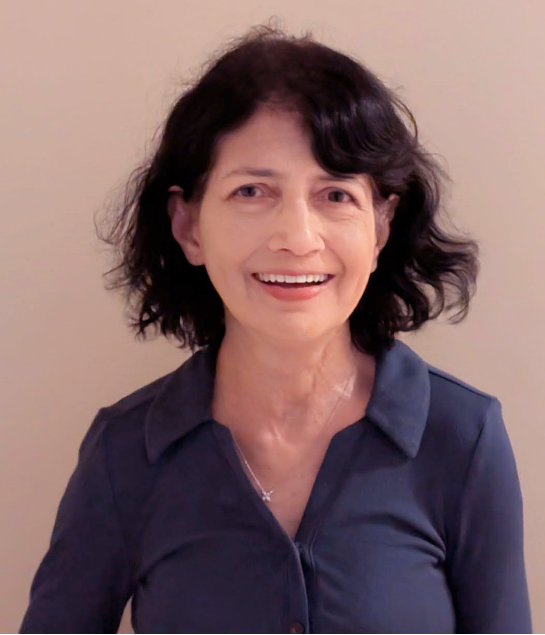

Tejash: How long have you been a member of the WCBA and what have some of your contributions been to the WCBA?
Melanie: Less than a year but, I have jumped in actively. Currently, I am co-leader of one of the Mentoring Circles of the WCBA, and we are hoping to have a virtual kick-off meeting with our circle of attorneys and law students in February to discuss “Thinking Beyond the Playbook: How to Solve Novel Problems When the Standard Rules Fall Short.” Feel free to reach out to me or Isabel Barney, the Executive Director of the WCBA, if you are interested in joining a mentoring circle!
Tejash: Can you share details about your current role and the journey to your position?
Melanie: I am an Issues & Appeals attorney and do mostly consulting for other law firms, helping them draft or revise appellate and SCOTUS briefs as well as dispositive motions. For the past sixteen (16) years, I have been Of Counsel to Kobre & Kim and performed freelance work involving legal research, analysis and briefing in New York and other jurisdictions as well as assisting with issue identification, preservation, and the exercise of legal judgment across the life of a case. But my experience as an Issues & Appeals attorney started long before that, including during my time at Mayer Brown’s Supreme Court & Appellate Practice and then during a six-year stint as an Assistant Solicitor General in the Appeals & Opinions Division of the New York State Attorney General’s Office. I knew from very early on that I did not want to specialize in a specific substantive area of law, pursue clients or deal with discovery and clashes with aggressive trial counsel. My practice allows me to deal with more congenial and cerebral people who grapple with novel issues arising in a variety of contexts at both the trial and appellate levels.
Tejash: Who are some of your
mentors?
Melanie: I was a full-time research assistant in law school to Constitutional scholar and Supreme Court litigator Laurence Tribe and even ended up working for him after clerking in his boutique litigation practice consisting of former students. I was also a full-time research assistant to torts and federal litigation professor David Rosenberg, who taught me how to think critically and creatively about problems and to consider less conventional approaches that helped make the practice of law interesting for me. I was also influenced by my time with Jon O. Newman, who was Chief Judge of the Second Circuit when I clerked for him, and I have attended several reunions with him and his clerks over the decades now that he has taken Senior status. And during my time in the New York State Attorney General’s Office, I learned a lot by working with then-Solicitor General Caitlin Halligan (now an associate justice on the New York Court of Appeals).
Tejash: What might people be surprised to learn about you?
Melanie: I am nowhere as good as my (fanatical) husband, but I am a decent pickleball player. It is actually a great way to socialize with others while getting exercise and I can practice trash-talking to my husband when we find ourselves playing on opposite sides.
Tejash: What is one of your guilty pleasures?
Melanie: Horror movies and listening to horror short stories (since I have a limited attention span and do not want to read after reading all day). I love stories that use atmosphere over gore and have shocking but logical reveals, and horror is the genre these days that offers the best twists.
Tejash: Is there any particular experience or training that helped build your skill set?
Melanie: I think my experience working on real cases with Laurence Tribe and Dave Rosenberg back in law school actually made the biggest difference, because it helped me avoid developing bad habits from the get-go and showed me that one could practice law creatively across different domains.
Tejash: What success are you most proud of?
Melanie: Although it was a while ago, I am proud of my role on appeal in a lawsuit brought by the New York Attorney General against the Seventh Regiment Fund over ownership of the artwork, objects, and memorabilia housed in the Seventh Regiment Armory at 643 Park Avenue, Manhattan. The New York Court of Appeals agreed to hear my appeal from the First Department’s adverse ruling, and the Court issued a 2006 ruling deciding in favor of New York State’s ownership of the material.
Tejash: What are some of your favorite meals, books or podcasts?
Melanie: I love Italian food, but especially when I eat it in the Emilia-Romagna region of Italy. I enjoy Golden Age mystery novels by such authors as Agatha Christie, Margaret Millar and Raymond Chandler, and although I am not a big podcast person, I enjoy listening to horror podcasts with standalone episodes like Knifepoint Horror and NoSleep.
Tejash: What is one of your future ambitions?
Melanie: I would like to continue my long-term project of writing and publishing a body of law review articles that, taken together, could be a book-level jurisprudence for understanding the development of legal judgment, and if I succeed, perhaps doing the same on some other topic of interest to me.
Tejash: Wellness is an important issue for all of our members. The WCBA’s Task Force on Well-Being issued a report with its recommendations. How do you manage your physical and/or mental health?
Melanie: Like every other neurotic professional in New York, I have my therapist/life coach, but in my case I try to manage my overall health by staying physically active (through pickleball), reserving time for family and friends, learning something new and wholly unrelated to law (taking piano lessons or painting) so work does not eclipse everything (as it has often done in my career), and having an intellectual outlet outside of my practice (including teaching as an adjunct professor and writing and publishing law review articles based on what I have observed over the years).















.png)







.jpg)
.jpg)

























.png)
